

clear reflective glass
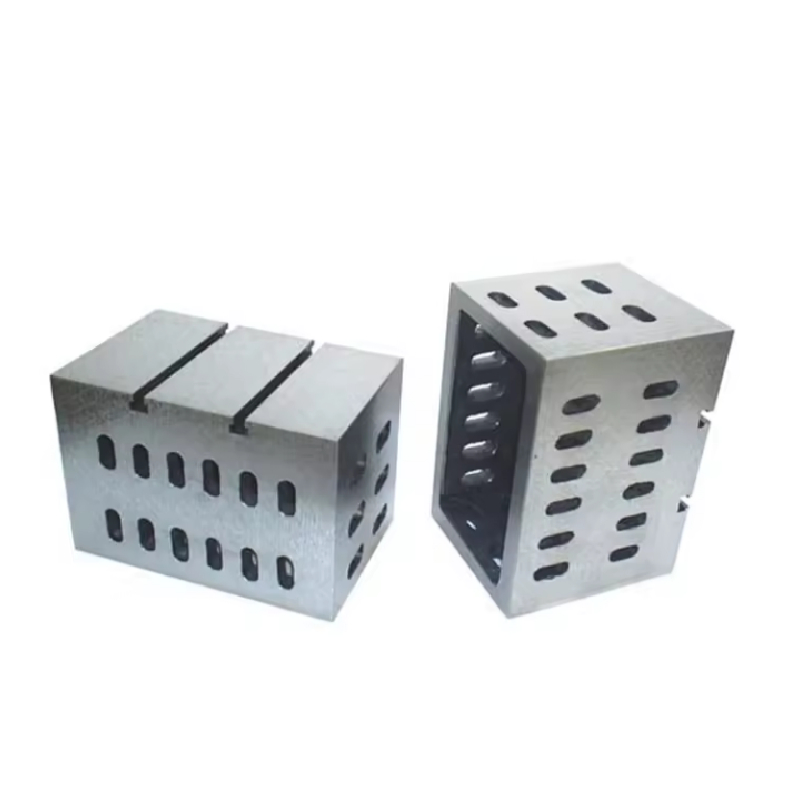
What shops get wrong (and right) about the surface plate in 2025 I’ve walked into too many metrology rooms where the granite looks spotless, the height gage is shiny—and the fixturing is improvisational at best. The unsung hero? Cast Iron Angle Plates. They’re the missing link between your reference surface plate and real-world setups for squareness checks, parallelism, and jigging. Sounds basic, but in practice it’s where many shops quietly lose microns (and money). Industry snapshot Shift toward shop-floor metrology—granite surface plate use now extends beyond labs with better environmental controls and covers. Hybrid setups: granite + cast iron angle plates for damping + rigidity. It seems that combo is winning on repeatability. More audits: ISO 9001 customers and PPAP require traceable flatness/squareness certificates from accredited labs. Customization demand up—T-slots, webbing, and stress relief are no longer “nice to have.” Product focus: Cast Iron Angle Plates for your surface plate From STR Machinery (Origin: No.17, Building 11, Hardware Building Material City, Botou, Cangzhou City, Hebei Province, China), these angle plates are used to build fixtures and verify squareness/parallelism. All machined faces are square and parallel—actually checked against standards like DIN 875 and DIN 876. Specs at a glance Material High‑grade cast iron (HT200/HT300), pearlitic matrix, ≈180–240 HB Standard Sizes (examples) 200×150×150 mm; 300×200×200 mm; 500×300×300 mm; customs available Flatness (each face) Up to Grade 1 per DIN 876: ≈6–10 μm/300 mm (real‑world use may vary) Squareness ≈6–12 μm/300 mm per DIN 875/GB/T standards Features Aged stress relief, ribbed webbing, hand‑scraped finish, optional T‑slots / slots Certificates Material cert, inspection report; calibration traceable to ISO 17025 (by request) Process flow (why it matters) Casting → rough machining → thermal/aging stress relief → semi‑finish → final machining → hand scraping → inspection (DIN 875/876) → packaging. Testing uses granite surface plate , autocollimator, precision squares, and temperature control at 20±1°C. Service life? Around 5–10 years with normal shop use, longer if you baby it—cleaning, rust prevention, and no hammering (yes, I’ve seen it). Where they shine Squareness checks on a surface plate for prismatic parts, mold bases, and fixtures. Parallelism verification with gauge blocks and dial indicators. Jig building for light machining ops and CMM staging (carefully). Aerospace, automotive, medical device, and die/mold shops, mostly. Many customers say the damping and rigidity combo beats makeshift setups. Surprisingly, even simple T‑slotted patterns cut setup time by ~20–30%. Vendor comparison (indicative) Vendor Origin Standards Customization Lead Time Price STR Machinery Botou, Cangzhou, China DIN 875/876, ISO‑traceable reports High (slots, size, webbing) ≈15–35 days Value Vendor B EU DIN/ISO Medium ≈30–45 days Premium Mini case study An automotive fixture team in Pune added T‑slotted cast iron angle plates to their 1200×900 granite surface plate . Setup repeatability improved from 22 μm to 9 μm (10‑part study, 20°C). They reported a 28% reduction in first‑article time and fewer NCRs. Not magic—just stable fixturing and proper stress‑relieved castings. Care tips Keep both the angle plate and surface plate clean; use lint‑free wipes and light oil on cast iron after use. Store vertically on wood blocks to avoid twist. Re‑calibrate yearly (or sooner if moved). Avoid impact loads; use torque‑controlled clamps. Citations: DIN 876: Flatness tolerances for cast iron and granite surface plates. ASME B89.3.7: Granite surface plates—Test and acceptance (latest edition). ISO 8512: Surface plates—Part 1/2 specifications and verification.
about
clear reflective glass
Types of Thread Gauges An Overview Thread gauges are essential tools in engineering and manufacturing that ensure precision and accuracy in threaded components. Their primary function is to measure the pitch, major diameter, minor diameter, and thread angle of threaded parts. Understanding the different types of thread gauges is crucial for those involved in industries such as manufacturing, automotive, and aerospace, where tolerance levels are stringently maintained. This article will delve into various types of thread gauges and their applications. 1. Go and No-Go Gauges One of the most basic forms of thread gauges is the Go and No-Go gauge. This type consists of two separate gauges the Go gauge, which represents the maximum allowable limits of a thread, and the No-Go gauge, which denotes the minimum allowable limits. When a threaded part passes the Go gauge but fails the No-Go gauge, it confirms that the part is within the specified tolerance range. This dual approach helps manufacturers quickly assess whether a part meets quality standards. 2. Thread Plug Gauges Thread plug gauges are cylindrical tools used to check the internal threads of parts, such as nuts or tapped holes. These gauges are available in both Go and No-Go styles. The Go end of the gauge should fit easily into the threaded hole, while the No-Go end should not fit. This ensures that internal threads are cut to the correct pitch and depth. 3 . Thread Ring Gauges Conversely, thread ring gauges are used to measure the external threads of parts, such as bolts and screws. Similar to thread plug gauges, they also come in Go and No-Go variants. The Go gauge checks the maximum limit of the external thread, while the No-Go gauge ensures that the thread does not exceed tolerance levels. These gauges are particularly important in applications where external threads must fit precisely into matching female threads. types of thread gauge 4. Thread Calipers Thread calipers are another type of thread gauge designed for more versatile applications. They can measure the pitch diameter of both internal and external threads. This tool is especially useful for assessing the uniformity and consistency of threads across a batch of threaded components. Unlike Go and No-Go gauges, thread calipers provide more detailed measurements, allowing for finer adjustments and quality control. 5. Pitch Gauges Pitch gauges are specialized tools used to measure the pitch of threads, which is the distance between one thread crest and the next. These gauges typically have various slots to accommodate different thread sizes and pitches. While they do not provide full measurements of the thread diameter or angle, they are invaluable for quickly identifying the pitch of a thread, aiding in selecting the appropriate tap or die for further machining processes. 6. Digital Thread Gauges With advancements in technology, digital thread gauges have emerged, providing a higher level of precision and ease of use. These gauges often come equipped with digital displays that show readings in real-time and can store multiple measurements for later reference. They are particularly advantageous for applications requiring frequent measurement and verification, improving efficiency in quality control processes. Conclusion The variety of thread gauges available is a testament to the importance of precision in manufacturing and engineering. From simple Go and No-Go gauges to advanced digital gauges, each type of thread gauge serves a specific purpose to ensure that threaded components meet the necessary specifications. Understanding these different types can significantly impact quality control and overall manufacturing efficiency, underscoring the importance of correctly calibrated and maintained thread gauges in any production setting.
-

High quality industrial productsagement

High quality industrial products
View Details -

Meet the diverse needs of customers

Meet the diverse needs of customers
View Details -

Strict quality control

Strict quality control
View Details -

Top raw materials

Top raw materials
View Details -

Trusted supplier

Trusted supplier
View Details
Our application


news and information
Water gate valve price
In the complex landscape of water management and distribution systems, the water gate valve holds a
Water Cut Off Valve - Comprehensive Guide and Best Practices
Understanding Water Cut-Off Valves Their Importance and Functionality Water cut-off valves are essen
Y Type Strainer Valve for Efficient Fluid Filtration and Flow Control Solutions
Understanding Y-Type Strainer Valves A Comprehensive Overview In the realm of fluid mechanics and pi
 English